by mothersasleaders | Jan 20, 2026 | A mother's inner world of emotions and feelings
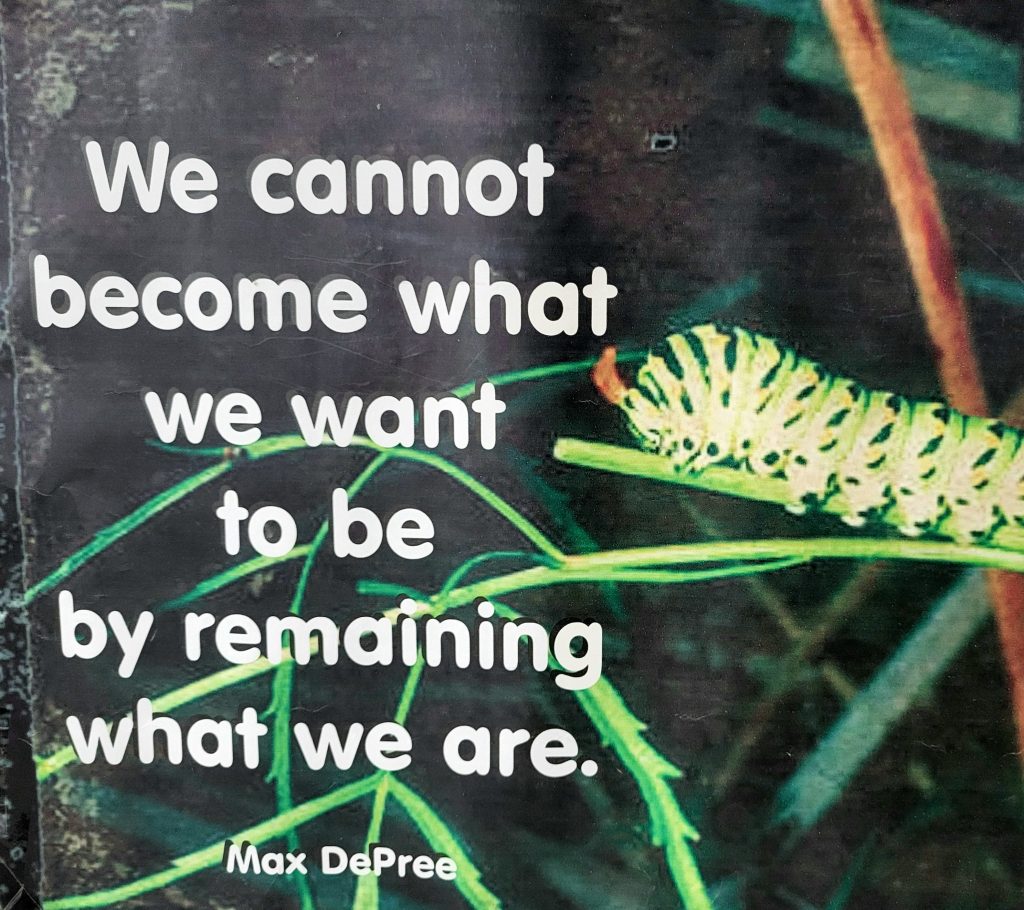 Technology and AI continue to reshape the labor market, and frequent job changes have become the norm. While you can’t stop the wheels from spinning, you can pause and ask yourself:
Why am I here? How am I making a difference — for my family, my team, my community?
Almost ten years ago, in 2017, I found myself at a similar crossroads. I wasn’t unhappy, but there was a quiet discomfort. I was good at what I did yet not truly stretched. That’s when I chose to begin my Systemic Team Coaching diploma with the AoEC. For me, impact mattered — and still does. That decision shaped my current career path.
When discomfort whispers, pay attention.
You may be performing well. Your work is solid. Your reputation is intact. And yet… something feels slightly off. Opportunities seem narrower than they should. Your energy is uneven. You’re not stuck, but you’re not fully stretched either. The start of a new year often amplifies this feeling. Goals reset. Expectations rise. And the big question surfaces:
What do I do next? Strengthen… or rebrand?
These two moves are often confused. They are not the same — and choosing the wrong one can slow your momentum rather than accelerate it. Knowing the difference is a strategic skill.
Why “rebranding” is often the wrong first question. Rebranding sounds bold and proactive, but it is frequently misunderstood. It is not a response to restlessness. It is not about wanting something different.
True rebranding is needed only when there is a misalignment between how you are known and the value you are ready to deliver next. Many professionals skip the diagnostic step. They change titles or language without understanding whether the real issue is perception, utilization, or direction.
Tip: Before you rebrand, seek clarity. Most career missteps come from acting on assumptions rather than evidence.
Common assumptions include:
- “People don’t see my full value.”
- “I need to pivot to stay relevant.”
- “What made me successful before won’t work now.”
Some may be true. Many are incomplete. The real work is understanding what matters to you and what matters to the organization that hired you.
Strengthening vs. Rebranding
- Strengthening is about making your existing value clearer, broader, and more visible.
You may need strengthening if:
- You are respected but underutilized
- Your contributions are strong but narrowly defined
- You’re trusted, but not invited into bigger conversations
- Your role has grown, but others still see you through an older lens
In these cases, your reputation isn’t wrong — it’s incomplete.
What helps: Clarify what you want to be relied on for. Expand your contribution. Make your judgment visible. Align your work with where the organization is going. This is evolution, not reinvention.
- Rebranding becomes necessary when your current reputation limits your future direction.
You may need to rebrand if:
- Your reputation blocks new opportunities
- You are typecast in a way that no longer fits
- Your strengths are tied to a role that is disappearing
- You want to move into work your current brand cannot support
Rebranding requires letting go of parts of how you are known, helping others update their mental model of you, and creating new evidence of performance. This is structural, not cosmetic.
A personal note
In 2017, I began by strengthening — investing in my coaching skills. Two years later, after completing my Senior Practitioner diploma, I realized I needed to rebrand from HR/OD Consultant to Leadership Coach and author. It wasn’t a single leap. It was a sequence.
Closing Reflection
Not every career moment calls for reinvention. Not every plateau is a problem. The most effective professionals are not those who constantly rebrand — but those who know when to strengthen and when to shift.
*************************************************************************
About the Author:
Steliana van de Rijt-Economu is a leadership (team) coach, global speaker, and author of the best-selling books “Parentship: A Leadership Guide for Families and Teams” and ‘Mothers as Leaders’. She is the founder of “Mothers as Leaders – learning across borders”, Linkedin community, a place dedicated to empowering working parents—especially women—to lead with purpose both at home and in the workplace

by mothersasleaders | Nov 26, 2025 | A mother's inner world of emotions and feelings
Turkey has become the centerpiece of Thanksgiving in the United States. After living here for four years, I still wonder why this bird was chosen to symbolize gratitude for the pilgrims’ survival.  I grew up in Romania, in a small ethnic community with roots in Northern Greece. For us, the biggest Christian Orthodox celebration is Easter — and lamb is the meal of choice.
My son became intrigued by the “turkey tradition,” so he and my husband recorded a special Thanksgiving episode of their podcast Zero Gravity called Eating Turkey Over Thanksgiving. They each took a position and presented arguments for and against it. The result is an entertaining twenty-minute dialogue that mostly shows how much fun they have as a team.
Celebrations usually begin as tokens of group values and community identity. But when we stop sharing the story behind them and only focus on the easy, fast symbols that money can buy, “celebration” quietly turns into “tradition.” And tradition, without meaning, becomes habit.
That shift from meaning to habit is exactly why, in my research interviews forth the latest book Parentship in Families as Teams, I invited parents to pause and ask themselves:
• Why are we doing this event, activity, or party?
• Is it for us? For the kids? Or maybe for what the neighbors, school, or peers might think?
• Does it bring us joy or satisfaction? Or is it quietly draining the joy we’re trying to create?
So, I ask you, dear reader:
🌱 What’s one tradition you are ready to drop this year?
🌱 What’s one new ritual you’d love to start?
The holiday season can make the invisible load feel heavier — not just for mothers, but for fathers too. The “holiday magic maker” role often falls on one person, but the impact is felt by the whole team.
🎉 Celebration Tips from Chapter 14: Building Family Team Rituals That Matter
In Chapter 14 of Parentship, we explore how celebration and recognition rituals can transform family dynamics. Here are a few practical ways to bring that spirit into your home this season:
• Start a Gratitude Circle: Before meals, take turns thanking someone in the family for a recent contribution — from cooking dinner to helping with homework.
• Celebrate Effort, Not Just Outcomes: Acknowledge when someone tries something new or shows kindness, even if the result isn’t perfect.
• Design Your Own Rituals: Whether it’s Friday pizza night, a winter walk, or a shared playlist for decorating the tree — make it yours.
• Honor Transitions: Birthdays, graduations, or even the end of a tough week can be marked with a simple ritual of acknowledgment.
These rituals don’t need to be elaborate. What matters is that they’re intentional, shared, and rooted in your family’s values.
*************************************************************************
About the Author:
Steliana van de Rijt-Economu is a leadership (team) coach, global speaker, and author of the best-selling books “Parentship: A Leadership Guide for Families and Teams” and ‘Mothers as Leaders’. She is the founder of “Mothers as Leaders – learning across borders”, Linkedin community, a place dedicated to empowering working parents—especially women—to lead with purpose both at home and in the workplace

by mothersasleaders | Sep 25, 2025 | A mother's inner world of emotions and feelings
For years, the leadership speech for women has been shaped by one idea: to be taken seriously, we must emulate the powerful male archetype—assertive, outspoken, extraverted. I lived that story in my 20s and 30s—I wore serious pantsuits, looked people straight in the eye, used humor to defuse tension, just like men do. I thought they’ll listen. It worked. I climbed the corporate career ladder, earned respect, and built a career. But something shifted in my late 30s and 40s. Motherhood cracked open a new dimension in me—I started to question the value of achievement, material things, and speed over safety, long-term responsibility, and quiet determination.
Perhaps there is a difference between women as leaders and mothers as leaders.
And it’s time we name it.
Mothers tap into a unique pool of feminine intuition and wisdom that comes from the need to protect the vulnerable. They are not all “Mother Theresa” types, of course. Some are more like Queen Consort Catherine de Medici of France, who made three of her sons kings and ultimately sacrificed the family for royal longevity—strategic, visionary, and sometimes ruthless. Mother-leaders don’t need a throne or a title to shape the future and do the right thing—they act when the situation calls for it.
In recent years, diversity policies have encouraged the rise of women leaders who embody “yang” traits—bold, visible, and vocal. That’s progress. But let’s not overlook the quiet power of mother-leaders who get things done through others, who build trust, who listen deeply, and who lead with love. They are not Napoleons, conquering new lands. Mothers are gardeners of human potential.
I see them every day. Elena and Saule, my Toastmasters club colleagues, are shining examples. They “mothered” a Gavel public speaking club for children. Their impact is tremendous. They do more and talk less. They smile, guide, and empower. They even make us look good in pictures. That’s what mother-leaders do. They face sleepless nights, emotional storms, and the weight of responsibility—and still show up with grace. They are determined. They know that true leadership is not about being in charge, but about caring deeply and acting wisely.
So I ask you, dear reader:
🌱 Do you have examples of mother-leaders around you at work?
🌱 Who are they, and what impact do they have on the people around them?
🌱 Do you recognize the mother-leader traits in yourself?
Let’s expand our definition of leadership. It’s time to unveil the quiet, strategic, nurturing force that mother-leaders bring to the table.
Let’s make space for leaders who build legacies not through domination, but through devotion and commitment.
How can you embrace your inner mother-leader?
- 💖 Truly know yourself and truly love yourself—acknowledge your strengths, vulnerabilities, and biases.
- 🌍 Explore the universe around you, beyond your family—your ideas matter.
- 🌸 Blossom and share your ideas with enthusiasm—don’t wait for permission.
- 🤝 Help and receive help—leadership is not a solo act.
- 🌟 Believe in yourself—never use negative words about yourself. Don’t apologize for your influence. Your voice is powerful.
Leadership starts with you.
Invest in your happiness and your dreams. Whether you’re a mother by birth, by spirit, or by action, your leadership leaves a lasting imprint. Let’s recognize it.
*************************************************************************
About the Author:
Steliana van de Rijt-Economu is a leadership (team) coach, global speaker, and author of the best-selling books “Parentship: A Leadership Guide for Families and Teams” and ‘Mothers as Leaders’. She is the founder of “Mothers as Leaders – learning across borders”, Linkedin community, a place dedicated to empowering working parents—especially women—to lead with purpose both at home and in the workplace

by mothersasleaders | Sep 17, 2025 | Uncategorized
Have you compared how you use ChatGPT versus how your spouse does it? Is it the same or different? Have you noticed your son or daughter ask prompts on ChatGPT? What do you see? 
Our personality, beliefs, values, and—why not—gender pre-conditioning influence how we engage with AI tools.
I recently listened to a New York Times podcast about the role of AI in education, from elementary school children all the way to academia. My husband listened to it as well. We each appreciated completely different elements.
I impatiently listened through the first part with a private school teacher who shared how AI will revolutionize the way we grade and give feedback to kids, and how AI will solve ‘learning motivation’ for kids—only to tune in to the story of one of the university professors who spoke about the clash of generational values when it comes to AI.
My husband was fascinated by one of the female MIT students in the NYT podcast. She shared how she was usually cautious about sharing her opinions and intellect in public, but she doesn’t have this problem in her dialogue with ChatGPT. There, she is not afraid of what the other party thinks about her opinion; she doesn’t feel judged. He admired that MIT student for using AI even better than he does, although he has five ‘AI platforms’ he uses regularly. My 10-year-old son calls them his AI friends.
Interestingly enough, my teen daughter chose not to share her thoughts—perhaps she’s still processing them. My 10-year-old son didn’t get the podcast link, but he frequently tells me that he always checks his spelling with AI.
💬 What Can We Make of This?
First of all, ‘humans will be humans.’ We are beautifully diverse, and we each bring our own lens to technology, shaped by our lived experiences. That’s okay.
Secondly, we should never assume we’ve mastered AI or know all the answers, just because we use five platforms on a daily basis. Practice only makes better when we weave reflection in between trials. The landscape is evolving, and so are we.
And third—and last— it’s worth opening the conversation about how we use AI with honesty and courage within our families, classrooms, workplaces, and communities.
🛠️ Tips from My Own Experience Navigating These Conversations at Home:
- Don’t get emotional about the ethics of using AI. Instead, stay curious and open.
- When someone shares a different point of view, pause. Breathe in, breathe out, and remind yourself:
- “Keep calm and carry on. You’re only human, after all.”
P.S. This article is an original piece by Steliana, thoughtfully proofread with support from Copilot AI.
If you enjoyed this reflection, sign up for Steliana’s newsletter and blog to receive more stories, insights, and tools for leading with purpose—at home and at work.
Join the conversation

by mothersasleaders | Sep 15, 2025 | Developing leadership skills as mothers, Parenthood learning by doing, Uncategorized
What is the best team you’ve ever worked in? What is the worst team you’ve ever worked in? These are the two questions I ask every new team I work with—whether it’s a senior global leadership team in the energy sector or a college students’ team. And the answers? They’re surprisingly similar. When people describe their best team, they say things like: “I felt safe to speak up and challenge the status quo.” “There was a clear purpose.” “Our boss was present, listened to us.” “I wasn’t afraid people would make fun of my mistakes or punish me.”
Everyone wants a team like this. But how often does it happen in reality? Not too often.Harvard professor Amy Edmondson coined the term psychological safety to describe cultures where all those good things happen. Her research was a breakthrough. But most initiatives that followed were top-down—focused on policies and programs.
The truth is, psychological safety isn’t built by HR. It’s experienced at the group level. It’s felt in the everyday interactions between team members. And it’s created through collective trust—not just individual behavior.
I believe the real work needs to happen at the team level. Where decision-making relies on both intuition and facts. Where trust is more than keeping promises—it’s about low self-orientation and high team orientation.
Creating psychological safety starts with personal leadership and integrity. It starts with presence. With listening. With modeling vulnerability. With responding instead of reacting. It’s not about being perfect—it’s about being intentional. I wish we had better examples in world politics and global institutions, but it seems that we need to practice leadership at home, in our communities and in our families.
When we, as leaders and parents, show up with curiosity instead of control, with empathy instead of ego, we create space for others to do the same. We build cultures where people don’t just survive but they grow as leaders.
And here’s the twist: this kind of leadership doesn’t just belong in the boardroom. It belongs at home.
In my book Parentship: Families as Teams, I explore how parenting is leadership—and how trust is built not just through harmony, but through conflict.
Improving your competence in dealing with conflict within the family can yield powerful effects in professional teams. At work, we often resolve conflict with open-ended questions: What? How? When? Where? Why? These stimulate constructive dialogue and help manage emotions.
But at home, conflict tends to revolve around the “Who?” Who did it? Who’s to blame? This hijacks the conversation and triggers a victim mindset: “I can’t believe you’re doing this to me!”
Sibling arguments—over snacks, embarrassment, or fairness—can feel endless. As parents, we often rush to intervene. But these moments are actually training grounds for conflict resolution. When we step in too quickly, we risk teaching our children that separation and silence are the answers to anger.
Instead, when we allow space for strong emotions and guide them through resolution, we build trust. We teach them how to fight and make up. And those skills carry into adulthood—into their own families, their own teams.
High-performing teams are like energized families. They argue, they challenge, they care. And that’s what makes them strong.
If I may invite you to reflect:
- What made your best team feel safe?
- What did the leader do to create that environment?
- And how can you bring those same qualities into your family?
Want to go deeper? Watch my short video on psychological safety and team culture, and explore Parentship for practical tools to lead your family like a team.
*************************************************
If you liked this article and you would like to see more of resources do sign-up for the monthly readers newsletter

 Technology and AI continue to reshape the labor market, and frequent job changes have become the norm. While you can’t stop the wheels from spinning, you can pause and ask yourself: