by mothersasleaders | Sep 17, 2025 | Uncategorized
Have you compared how you use ChatGPT versus how your spouse does it? Is it the same or different? Have you noticed your son or daughter ask prompts on ChatGPT? What do you see? 
Our personality, beliefs, values, and—why not—gender pre-conditioning influence how we engage with AI tools.
I recently listened to a New York Times podcast about the role of AI in education, from elementary school children all the way to academia. My husband listened to it as well. We each appreciated completely different elements.
I impatiently listened through the first part with a private school teacher who shared how AI will revolutionize the way we grade and give feedback to kids, and how AI will solve ‘learning motivation’ for kids—only to tune in to the story of one of the university professors who spoke about the clash of generational values when it comes to AI.
My husband was fascinated by one of the female MIT students in the NYT podcast. She shared how she was usually cautious about sharing her opinions and intellect in public, but she doesn’t have this problem in her dialogue with ChatGPT. There, she is not afraid of what the other party thinks about her opinion; she doesn’t feel judged. He admired that MIT student for using AI even better than he does, although he has five ‘AI platforms’ he uses regularly. My 10-year-old son calls them his AI friends.
Interestingly enough, my teen daughter chose not to share her thoughts—perhaps she’s still processing them. My 10-year-old son didn’t get the podcast link, but he frequently tells me that he always checks his spelling with AI.
💬 What Can We Make of This?
First of all, ‘humans will be humans.’ We are beautifully diverse, and we each bring our own lens to technology, shaped by our lived experiences. That’s okay.
Secondly, we should never assume we’ve mastered AI or know all the answers, just because we use five platforms on a daily basis. Practice only makes better when we weave reflection in between trials. The landscape is evolving, and so are we.
And third—and last— it’s worth opening the conversation about how we use AI with honesty and courage within our families, classrooms, workplaces, and communities.
🛠️ Tips from My Own Experience Navigating These Conversations at Home:
- Don’t get emotional about the ethics of using AI. Instead, stay curious and open.
- When someone shares a different point of view, pause. Breathe in, breathe out, and remind yourself:
- “Keep calm and carry on. You’re only human, after all.”
P.S. This article is an original piece by Steliana, thoughtfully proofread with support from Copilot AI.
If you enjoyed this reflection, sign up for Steliana’s newsletter and blog to receive more stories, insights, and tools for leading with purpose—at home and at work.
Join the conversation

by mothersasleaders | Sep 15, 2025 | Developing leadership skills as mothers, Parenthood learning by doing, Uncategorized
What is the best team you’ve ever worked in? What is the worst team you’ve ever worked in? These are the two questions I ask every new team I work with—whether it’s a senior global leadership team in the energy sector or a college students’ team. And the answers? They’re surprisingly similar. When people describe their best team, they say things like: “I felt safe to speak up and challenge the status quo.” “There was a clear purpose.” “Our boss was present, listened to us.” “I wasn’t afraid people would make fun of my mistakes or punish me.”
Everyone wants a team like this. But how often does it happen in reality? Not too often.Harvard professor Amy Edmondson coined the term psychological safety to describe cultures where all those good things happen. Her research was a breakthrough. But most initiatives that followed were top-down—focused on policies and programs.
The truth is, psychological safety isn’t built by HR. It’s experienced at the group level. It’s felt in the everyday interactions between team members. And it’s created through collective trust—not just individual behavior.
I believe the real work needs to happen at the team level. Where decision-making relies on both intuition and facts. Where trust is more than keeping promises—it’s about low self-orientation and high team orientation.
Creating psychological safety starts with personal leadership and integrity. It starts with presence. With listening. With modeling vulnerability. With responding instead of reacting. It’s not about being perfect—it’s about being intentional. I wish we had better examples in world politics and global institutions, but it seems that we need to practice leadership at home, in our communities and in our families.
When we, as leaders and parents, show up with curiosity instead of control, with empathy instead of ego, we create space for others to do the same. We build cultures where people don’t just survive but they grow as leaders.
And here’s the twist: this kind of leadership doesn’t just belong in the boardroom. It belongs at home.
In my book Parentship: Families as Teams, I explore how parenting is leadership—and how trust is built not just through harmony, but through conflict.
Improving your competence in dealing with conflict within the family can yield powerful effects in professional teams. At work, we often resolve conflict with open-ended questions: What? How? When? Where? Why? These stimulate constructive dialogue and help manage emotions.
But at home, conflict tends to revolve around the “Who?” Who did it? Who’s to blame? This hijacks the conversation and triggers a victim mindset: “I can’t believe you’re doing this to me!”
Sibling arguments—over snacks, embarrassment, or fairness—can feel endless. As parents, we often rush to intervene. But these moments are actually training grounds for conflict resolution. When we step in too quickly, we risk teaching our children that separation and silence are the answers to anger.
Instead, when we allow space for strong emotions and guide them through resolution, we build trust. We teach them how to fight and make up. And those skills carry into adulthood—into their own families, their own teams.
High-performing teams are like energized families. They argue, they challenge, they care. And that’s what makes them strong.
If I may invite you to reflect:
- What made your best team feel safe?
- What did the leader do to create that environment?
- And how can you bring those same qualities into your family?
Want to go deeper? Watch my short video on psychological safety and team culture, and explore Parentship for practical tools to lead your family like a team.
*************************************************
If you liked this article and you would like to see more of resources do sign-up for the monthly readers newsletter

by mothersasleaders | Sep 3, 2025 | A mother's inner world of emotions and feelings
“It is hard to be a woman. You must think like a man, act like a lady, look like a young girl, and work like a horse.”
I’m sure you’ve all heard the famous jokes—mostly made by men—about the perfect woman. There’s a kind of self-inflicted pain we women experience when aiming to become the ideal woman.
Personality traits like perfectionism and the inner drive to please others tend to negatively impact our work-life balance. I’m not a perfectionist, but I don’t like to say “no,” and I enjoy helping others, which means my day fills up pretty quickly. Learning to say “no” and making personal choices about the activities where I know I can truly have an impact was one of the first lessons I had to learn in my career.
What is the perfect balance? Sometimes I think work-life balance is a myth—or just a catchy phrase HR professionals use to lure new hires. For me, there’s no silver bullet. You either have a quiet job that eventually becomes too quiet and doesn’t give you the adrenaline you need, or a chaotic, fast-paced job that leaves you exhausted at the end of the day.
It’s all about making the right choice for you at the right time.
I sometimes think we should just let go and accept our imperfections. It’s what makes us human—and it’s what makes us truly beautiful.
Through  my qualitative research with women—mothers from across geographies and social ranks—I’ve come to understand that work-life balance is not a fixed destination. It’s a moving object, constantly shaped by time and place.
But there is a way to stay true to yourself and your dreams while navigating the chaos. Five key behaviours emerged from these conversations—simple, powerful actions that help us aim for balance without losing ourselves:
- Know Yourself: Understand your strengths, vulnerabilities, and biases.
- Explore: Stay curious and open-minded.
- Give and Receive Help: Don’t be afraid to ask and be generous when you can.
- Blossom: Let your enthusiasm shine—don’t dim your light.
- Believe in Yourself: Trust your instincts and your worth.
These ‘Dare to Dream” behaviours aren’t a checklist—they’re a compass. They won’t eliminate the pressure, but they can guide us through it with grace and authenticity.
********************
About the Author:
Steliana van de Rijt-Economu is a leadership (team) coach, global speaker, and author of the best-selling books “Parentship: A Leadership Guide for Families and Teams” and ‘Mothers as Leaders’. She is the founder of “Mothers as Leaders – learning across borders”, Linkedin community, a place dedicated to empowering working parents—especially women—to lead with purpose both at home and in the workplace

by mothersasleaders | Aug 13, 2025 | Developing leadership skills as mothers, Parenthood learning by doing, Uncategorized
If you leave in the US and have a child starting school tomorrow, the expression back to school takes on a whole new dimension. It can be excitement for the child—and hope mixed with apprehension and anxiety for the mother.
I admit I am a typical momma–boy mother. My son Thomas is starting 5th grade tomorrow and he is totally ready to bike to school by himself, but I still like to keep that special walk-to-school-together experience for as long as it takes.
Beyond being a typical mom, I’m also a leadership coach for working parents. I completed a qualitative study on families as teams and Parentship, and through my research I found that many parenting struggles are surprisingly universal—regardless of geography or school systems.
Common Modern Parenting Challenges
- Career Demands often peak just as young professionals become parents, especially for women entering leadership roles.
- High Expectations from educated parents can create stress—often more from internal pressure than external.
- Limited Time for self-care and relationships leads to burnout and strain within couples.
- Social Pressure still judges fathers by their ability to provide and mothers by their nurturing.
- Information Overload from schools, clubs, and professionals can overwhelm, especially when one parent carries the load.
- Modern Advice Overload creates confusion and inconsistency in parenting approaches.
- Changing Family Structures and rising divorce rates mean many parents must redefine what “family” looks like.
- Online Safety is a growing concern, especially for divorced parents trying to align digital boundaries.
- Single Parenthood is increasingly common, often without the support systems needed to balance career and parenting.
Realistic Ways to Reduce Stress
As someone who coaches working parents and teams through life’s complex transitions, I want to offer a few realistic ways to reduce stress—not just for your kids, but for you, too.
Try these small but powerful shifts:
- Don’t Treat Your Family Like an Operations Team Time management isn’t just about efficiency. It’s about doing what matters most, in a way that respects your energy and emotional bandwidth.
- Focus on Root Causes Productivity tools won’t fix misaligned priorities, overcommitment, or tech distractions. Address the behaviors behind the chaos.
- Accept That Things Will Change As your children grow, your expectations must evolve. Flexibility is key to long-term harmony.
🧠 Reflect as You Plan
Back-to-school season doesn’t have to mean back to stress. A few proactive steps in collective time management can lead to calmer mornings, stronger relationships, and more meaningful moments.
Reflect on this:
- How can you share tasks among family members—including the kids—based on their strengths?
- How could a little structure actually create more freedom for your family?
Let’s make space for what really matters—not just for our kids, but for ourselves.
*************************************************
If you liked this article and you would like to hear more about my upcoming book: ‘Parentship. A leader guide for families and teams’, you can sign-up my monthly readers newsletter
by mothersasleaders | Jun 9, 2025 | Uncategorized
Dear Mothers as leaders community,
 Save the Date! Global Virtual Book Launch: June 24, 2025 , 10.00 – 10.45 am CST(Houston), 17.00 CET(Amsterdam)
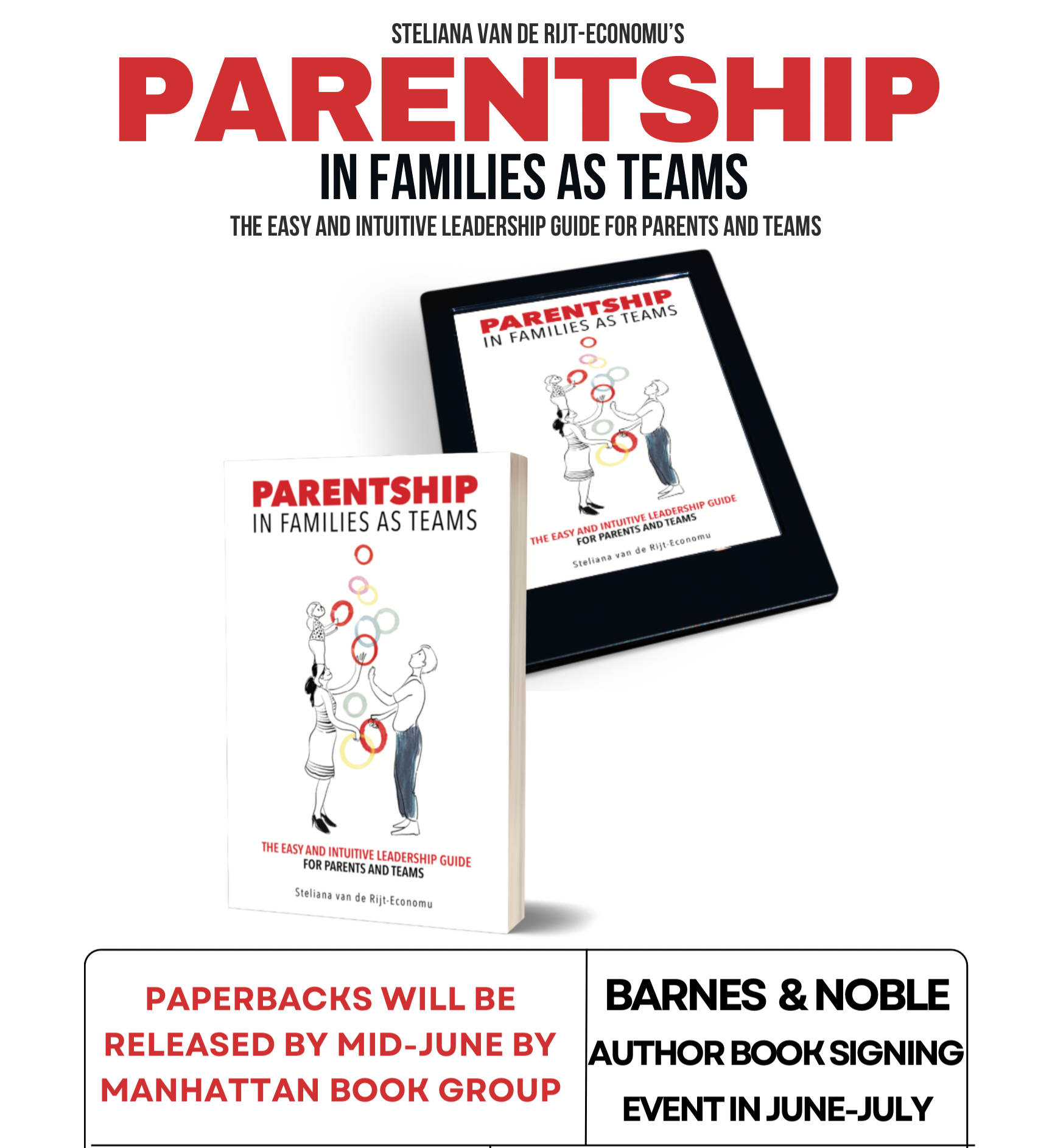
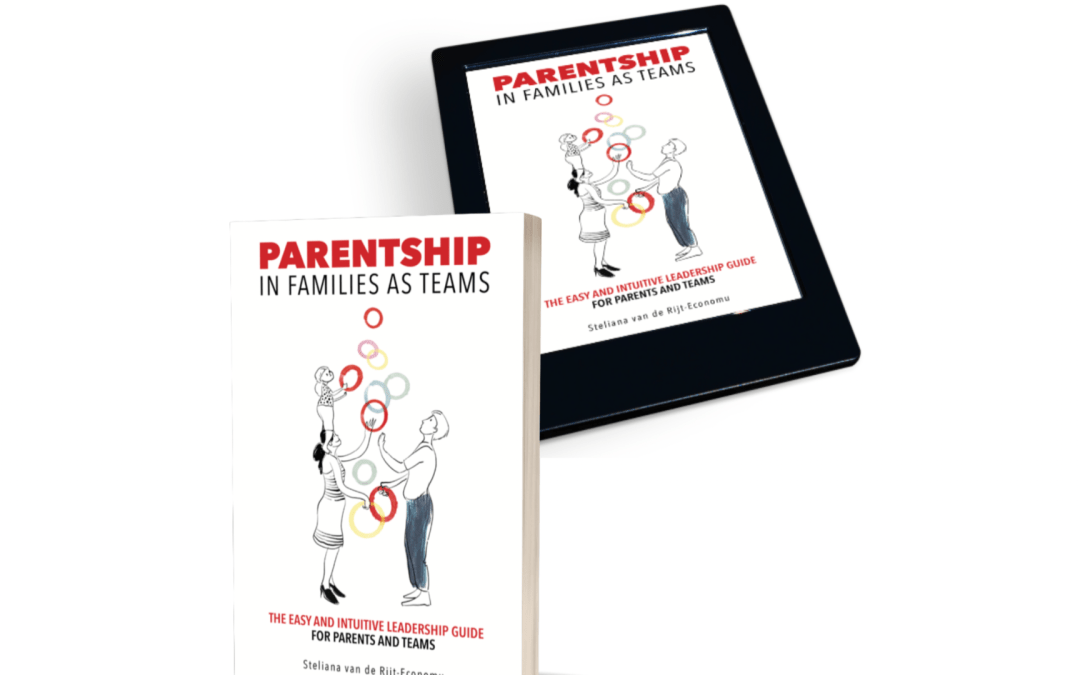
I’m delighted to share that our new book, Parentship in Families as Teams, published by Manhattan book group is now available globally!

Join an exclusive Book Launch Session, hosted by fellow team coach Jennifer Berman, to discover your leadership/parentship style—plus, how family and team conflict can actually strengthen loyalty and commitment.
Secure your place via theZoom RSVP form and receive a confirmation email with the Calendar block. Live participants can sign-up for author signed copies.
Paperback & Hardcover released by: June 16, 2025. You can order the significantly discounted ebook or paperback on Amazon!
‘This book is a powerful reminder that the strongest teams feel like families – not because everything is easy, but because they are built on trust, shared purpose and the courage to have the tough conversations. ‘ – Emily Hilton, Head of Innovation at Rio Tinto