by mothersasleaders | Sep 15, 2025 | Developing leadership skills as mothers, Parenthood learning by doing, Uncategorized
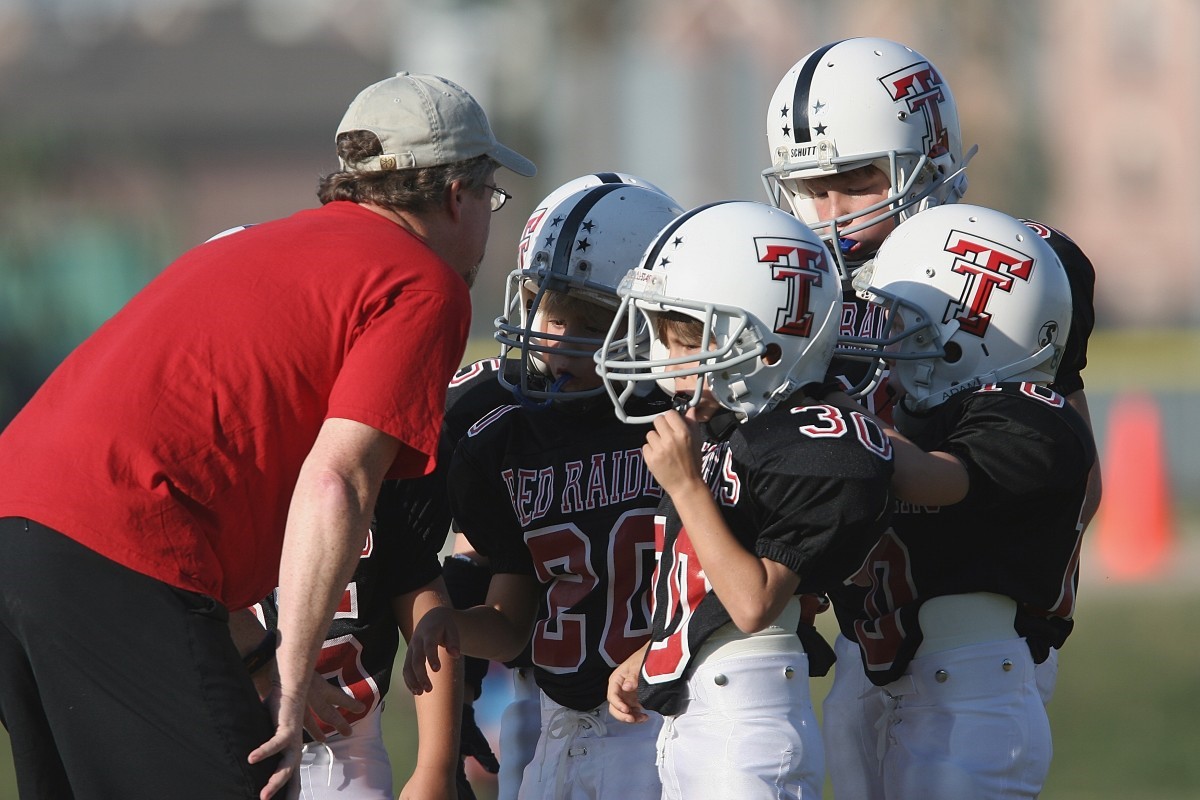
What is the best team you’ve ever worked in? What is the worst team you’ve ever worked in? These are the two questions I ask every new team I work with—whether it’s a senior global leadership team in the energy sector or a college students’ team. And the answers? They’re surprisingly similar. When people describe their best team, they say things like: “I felt safe to speak up and challenge the status quo.” “There was a clear purpose.” “Our boss was present, listened to us.” “I wasn’t afraid people would make fun of my mistakes or punish me.”
Everyone wants a team like this. But how often does it happen in reality? Not too often.Harvard professor Amy Edmondson coined the term psychological safety to describe cultures where all those good things happen. Her research was a breakthrough. But most initiatives that followed were top-down—focused on policies and programs.
The truth is, psychological safety isn’t built by HR. It’s experienced at the group level. It’s felt in the everyday interactions between team members. And it’s created through collective trust—not just individual behavior.
I believe the real work needs to happen at the team level. Where decision-making relies on both intuition and facts. Where trust is more than keeping promises—it’s about low self-orientation and high team orientation.
Creating psychological safety starts with personal leadership and integrity. It starts with presence. With listening. With modeling vulnerability. With responding instead of reacting. It’s not about being perfect—it’s about being intentional. I wish we had better examples in world politics and global institutions, but it seems that we need to practice leadership at home, in our communities and in our families.
When we, as leaders and parents, show up with curiosity instead of control, with empathy instead of ego, we create space for others to do the same. We build cultures where people don’t just survive but they grow as leaders.
And here’s the twist: this kind of leadership doesn’t just belong in the boardroom. It belongs at home.
In my book Parentship: Families as Teams, I explore how parenting is leadership—and how trust is built not just through harmony, but through conflict.
Improving your competence in dealing with conflict within the family can yield powerful effects in professional teams. At work, we often resolve conflict with open-ended questions: What? How? When? Where? Why? These stimulate constructive dialogue and help manage emotions.
But at home, conflict tends to revolve around the “Who?” Who did it? Who’s to blame? This hijacks the conversation and triggers a victim mindset: “I can’t believe you’re doing this to me!”
Sibling arguments—over snacks, embarrassment, or fairness—can feel endless. As parents, we often rush to intervene. But these moments are actually training grounds for conflict resolution. When we step in too quickly, we risk teaching our children that separation and silence are the answers to anger.
Instead, when we allow space for strong emotions and guide them through resolution, we build trust. We teach them how to fight and make up. And those skills carry into adulthood—into their own families, their own teams.
High-performing teams are like energized families. They argue, they challenge, they care. And that’s what makes them strong.
If I may invite you to reflect:
- What made your best team feel safe?
- What did the leader do to create that environment?
- And how can you bring those same qualities into your family?
Want to go deeper? Watch my short video on psychological safety and team culture, and explore Parentship for practical tools to lead your family like a team.
*************************************************
If you liked this article and you would like to see more of resources do sign-up for the monthly readers newsletter

by mothersasleaders | Aug 13, 2025 | Developing leadership skills as mothers, Parenthood learning by doing, Uncategorized
If you leave in the US and have a child starting school tomorrow, the expression back to school takes on a whole new dimension. It can be excitement for the child—and hope mixed with apprehension and anxiety for the mother.
I admit I am a typical momma–boy mother. My son Thomas is starting 5th grade tomorrow and he is totally ready to bike to school by himself, but I still like to keep that special walk-to-school-together experience for as long as it takes.
Beyond being a typical mom, I’m also a leadership coach for working parents. I completed a qualitative study on families as teams and Parentship, and through my research I found that many parenting struggles are surprisingly universal—regardless of geography or school systems.
Common Modern Parenting Challenges
- Career Demands often peak just as young professionals become parents, especially for women entering leadership roles.
- High Expectations from educated parents can create stress—often more from internal pressure than external.
- Limited Time for self-care and relationships leads to burnout and strain within couples.
- Social Pressure still judges fathers by their ability to provide and mothers by their nurturing.
- Information Overload from schools, clubs, and professionals can overwhelm, especially when one parent carries the load.
- Modern Advice Overload creates confusion and inconsistency in parenting approaches.
- Changing Family Structures and rising divorce rates mean many parents must redefine what “family” looks like.
- Online Safety is a growing concern, especially for divorced parents trying to align digital boundaries.
- Single Parenthood is increasingly common, often without the support systems needed to balance career and parenting.
Realistic Ways to Reduce Stress
As someone who coaches working parents and teams through life’s complex transitions, I want to offer a few realistic ways to reduce stress—not just for your kids, but for you, too.
Try these small but powerful shifts:
- Don’t Treat Your Family Like an Operations Team Time management isn’t just about efficiency. It’s about doing what matters most, in a way that respects your energy and emotional bandwidth.
- Focus on Root Causes Productivity tools won’t fix misaligned priorities, overcommitment, or tech distractions. Address the behaviors behind the chaos.
- Accept That Things Will Change As your children grow, your expectations must evolve. Flexibility is key to long-term harmony.
🧠 Reflect as You Plan
Back-to-school season doesn’t have to mean back to stress. A few proactive steps in collective time management can lead to calmer mornings, stronger relationships, and more meaningful moments.
Reflect on this:
- How can you share tasks among family members—including the kids—based on their strengths?
- How could a little structure actually create more freedom for your family?
Let’s make space for what really matters—not just for our kids, but for ourselves.
*************************************************
If you liked this article and you would like to hear more about my upcoming book: ‘Parentship. A leader guide for families and teams’, you can sign-up my monthly readers newsletter
by mothersasleaders | Mar 31, 2025 | Developing leadership skills as mothers, Parenthood learning by doing, Uncategorized
It is the end of March, and I feel a bit tired. How about you? It has been an eventful start to the year, with three months filled with sudden shifts, changes, and last-minute political announcements. As a mother or caregiver, you rarely have the time to sit down and debate the ‘state of the world’; there is dinner to be made, kids to be brought to school, client work, projects, etc. When I read this quote : “Who will care and protect the carers?” by Peter Hawkins, it touched my heart. I wondered how many mothers and caregivers take the time to ask themselves: Who is in your support group? Who cares for you as a mother? And who protects your dreams and career aspirations? Every choice you make at home has a ripple effect on your capacity for work and vice versa.
It takes a village to raise a child, but it takes an entire community to protect the caregivers. Together, we can be stronger.
We are offering two revitalizing workshops during the month of April:
“Mothers as Leaders: Replenish Your Well” Workshop Dates:
- Option 1: April 11 (Friday), 9:00 AM CST (Houston) / 4:00 PM CET (Amsterdam)
- Option 2: April 14 (Monday), 1:00 PM CST (Houston) / 8:00 PM CET (Amsterdam)
This workshop is designed to replenish your energy as a leader, parent, and caregiver.Please add your name and your preferred option (Option 1 or Option 2) via this google form and you will receive a unique invitation and registration link. Location: [Virtual, Zoom]
New Book Coming Soon! I’m thrilled to share that ‘Parentship: A Leader Guide for Families and Teams’, is moving into production phase. With a planned release date at the end of May through Manhattan Book Group publishing house, the timing couldn’t be more perfect as we approach Mother’s Day. Would you like a sneak peek? I am able to share the first 20 pages, the backdraft and the outline with my community. Drop me a line, and I’ll email them to you, plus we will add you to the book launch events—whether virtual or local (N.Houston), Amsterdam, Bucharest or New York.
*************************************************
If you liked this article and you would like to hear more about my upcoming book: ‘Parentship. A leader guide for families and teams’, you can sign-up my monthly readers newsletter
Recommended resources – mostly free
Book: “Find out anything from anyone, anytime.Secrets of calculated questioning from a veteran interogator’ – I truly enjoyed reading this book last year and I certainly applied its teachings at home and at work.
My Latest Blog: Teamwork, parentship and micromanagement
Check out the audio book version of Mothers as Leaders, available on Audibles
Available via the renowned Udemy academy, two pragmatic online courses, on:
Mother’s Guilt and Working Identity
Coming soon: Personal Branding in a AI enabled hybrid world

by mothersasleaders | Feb 8, 2025 | Developing leadership skills as mothers, Parenthood learning by doing, Uncategorized

We all love the concept of teamwork when it comes to our favorite sports, but how about teamwork at home or at work. What can we do to let teamwork blossom and avoid micromanaging, when leading teams or trying to ‘lead’ families.
For instance, here in the U.S., we are gearing up for the Super Bowl. On Sunday afternoon, February 9, half of the country will gather around some TV set to watch Kansas City against the Philadelphia Eagles. As a true European, I personally love to watch soccer (some might say the real football), but on Sunday afternoon, I will be joining my neighbors to watch the Super Bowl. Last year, I watched it by myself at home (I know, it’s sad:). Despite its apparent violence, football is a strategic sport with specific rules, key positions, and a strong focus on yardage. Each team has four attempts to advance the ball 10 yards. Success hinges on strategic planning, precise execution, and adaptability during the game, not on micromanagement.
But teamwork isn’t just for sports. We need it in our professional and family lives too. We certainly need it from our top leaders.
The Parallels Between Professional and Family Teams
Families, much like teams, work together for a joint purpose. Whether it’s supporting children with homework, managing household chores, moving houses, or organizing birthday parties, families are constantly working as a team. However, we often focus on sports teams and forget about the importance of teamwork in our daily lives.
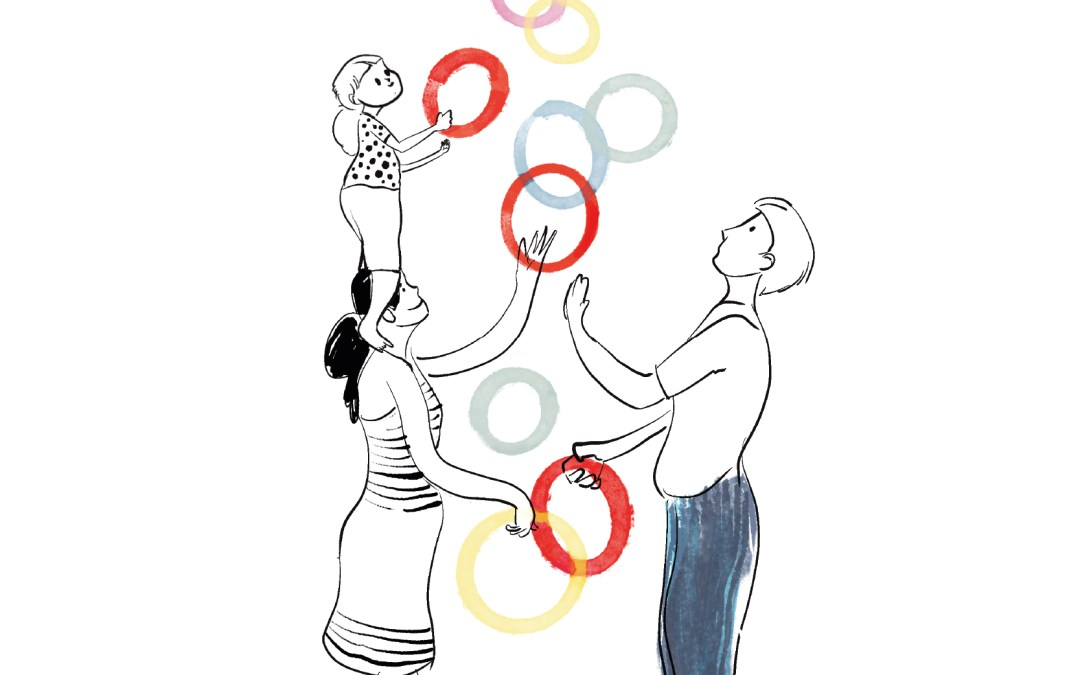
In my upcoming book on Parentship, I explore how the principles of teamwork apply to family units. I also discuss the common traps parents can fall into when they micromanage their family. Not surprisingly, the same traps apply to team leaders too.
Are You a Micromanager parent?
How can you tell? In simple words, in the business world, management is about maintaining the status quo and the present situation, while leadership is about visualizing the future and inspiring other people to see it too. If you find yourself constantly planning, organizing, controlling, and problem-solving, you might be leaning too much into a manager role. If you are considering how ecosystem changes might impact your family and team now and, in the future, you are leaning towards leadership.
7 Micromanagement Traps
Here are seven micromanagement traps that can kill the family-team spirit and that apply to the workplace as well:
Trap 1: Over-scheduling and lack of autonomy. Over-scheduling children reduces their autonomy and increases their stress; at work, your team members will stop using their judgment and in time will lack agency in how they approach their work.
Trap 2: Excessive monitoring of academic and work performance. Constantly checking grades or your employees’ timesheets and sales targets can make them feel like a ‘useful object.’
Trap 3: Involvement in conflict resolution. Intervening too quickly in conflicts in sibling quarrels is bad, but at work, it inhibits team members from developing interpersonal problem-solving skills. If you become good at solving conflicts, your agenda will get pretty full.
Trap 4: Dictating social choices. Controlling who your children associate with might seem like good parenting, but it hinders their development of trust and social skills. At work, your comments about other teams or co-workers will certainly have an impact on your team members. Silent gossip is the worst.
Trap 5: Constant correcting and feedback. How many people attribute their success to the constant feedback received from their bosses, and how many attribute it to the encouragement they received when their motivation was down? Too much correction reduces intrinsic motivation and makes people overly dependent on external approval.
Trap 6: Overprotection. Shielding children from all challenges prevents them from developing the courage to pull through. The same applies to new team members.
Trap 7: Micromanaging goals. Imposing rigid goals without flexibility decreases motivation and can lead to disengagement. If I push my son to play the piano every day, he will simply not do it, but if I let him choose the moment, he does it. It is not always the timing I prefer, but that is not my learning goal.
Ask yourself honestly: Am I falling into these traps? How would your children or team members answer this question for you?
It takes self-awareness and patience to stop micromanaging. May the change of seasons give us the courage and intuition to find ease and flow as parents and leaders.
*************************************************
If you liked this article and you would like to hear more about my upcoming book: ‘Parentship. A leader guide for families and teams’, you can sign-up my monthly readers newsletter

by mothersasleaders | Nov 5, 2024 | Developing leadership skills as mothers, Parenthood learning by doing, Uncategorized
 As we leave Halloween behind and start preparing for Thanksgiving, I find myself reflecting on family dynamic’s—and on how they parallel the dynamics within professional teams. Over the past two weeks, I’ve been re-immersed in the “6 Conditions of a Team” as part of my Level 2 TDS training. The training has been refreshingly experiential, with regular team assignments to complete under tight deadlines. These shared challenges quickly bring genuine team dynamics and ingrained habits to the surface, pushing us to deliver under pressure. Even though we’re all experienced facilitators and coaches, we still rely on humor and transparency to navigate the bumps that arise.
The Team Diagnostic Survey (TDS) is a well-validated tool designed to diagnose the strengths and weaknesses of teams. Developed by Drs. Ruth Wageman, Richard Hackman, Erin Lehman, and colleagues at Harvard and other institutions, this assessment identifies six critical conditions that are key to team success and predict up to 80% of a team’s overall effectiveness. These include three Essential Conditions—having a Real Team, a Compelling Purpose, and the Right People—along with three Enablers: Work Design, Organizational Support, and Team Coaching. When these six conditions are met, three core team behaviors—Fostering Effort, Crafting Strategies, and Leveraging Talent—naturally emerge, driving meaningful results. Teams that meet these criteria are more likely to satisfy stakeholder needs, foster collective growth, and promote the learning and well-being of each team member.
Through this training, I’ve become even more attuned to how these six conditions and team behaviors relate to unspoken dynamics. In both family and professional settings, unaddressed frustrations or assumptions can disrupt these essential conditions. This is especially evident in my own family. Despite living far from my siblings, when we come together—especially around sensitive topics like our parents’ health—we often slip into familiar roles. One sibling might jump to bold solutions, another may sidestep the issue, and I often take on the mediator role. But underneath these roles lie unspoken frustrations that can become invisible barriers to true collaboration.
In my work with professional teams, I use a powerful technique called the “Dead Dog” or “Unspoken Behaviors” exercise, introduced to me by John Leary-Joyce at the Academy of Executive Coaching. This exercise is designed to safely bring hidden thoughts and assumptions to the surface—especially the behaviors that team members might typically avoid addressing.
The exercise works as follows:
- List Unspoken Concerns: Each team member anonymously writes down an issue they feel impacts team dynamics, focusing on behaviors rather than individuals.
- Share Anonymously: Team members take turns reading each issue aloud as if it were their own.
- Vote & Discuss: After voting on the top issues, the team openly discusses these points and considers new norms.
This exercise has helped many teams I’ve coached to face hidden frustrations directly, creating practical norms for better collaboration. However, timing is crucial; one team I worked with delayed their follow-up discussion, which caused them to lose momentum and impact.
With Thanksgiving and Christmas approaching, consider the unspoken truths in your own family—and perhaps even more importantly, within your teams. Sometimes, it’s worthwhile to awaken sleeping dogs and bring those hidden dynamics to light.
I can’t promise you that I’ll fix your family dynamics by magic, but if you’re interested in improving your team effectiveness through team coaching, let’s get in touch.
Thank you for reading this blog. I welcome the ideas and topics that you would like to see in the future editions. You can send me a message here or write to me at steliana@mothersasleaders.com.
And if you have not yet subscribed to my email newsletter you can do so here-
https://mailchi.mp/4246b84db22d/a-positive-letter-from-steliana-17604839
Keep well,
Steliana

by mothersasleaders | Aug 10, 2024 | Developing leadership skills as mothers, Parenthood learning by doing, Uncategorized
✨Are you a high-achieving mother who dreams of a career change that brings more flexibility but feels stuck by the uncertainty? Are you a father with a thriving career but find yourself struggling to balance professional success with being present for your family?
You are not alone.
Back in 2019 I ended a corporate career looking to start an independent consultancy. My early endeavors failed as the pandemic hit. It became clear to me that I had to reinvent myself before I could reinvent my career. The Mothers as Leaders book became my catalyst for change while the Positive Intelligence program became my vehicle to help working parents to move from the survival into the decision mode.
Whether you’re considering a career change or starting a new business, the key to success lies in your mindset. That’s where Positive Intelligence (PQ) comes in.
I’m excited to invite you to join our exclusive Positive Intelligence (PQ) group coaching program starting this September! 🎉
In this transformative program, you’ll:
- Discover how Positive Intelligence (PQ) can help you shift from doubt to confidence.
- Learn about the 3 mental muscles you need to grow to overcome fear and embrace new opportunities.
- Get mentally prepared for your next big step with personalized coaching and an easy-to-use app.
This 2-month program is designed for those ready to take action and make a real change. But hurry—only 3 spots are left for the Sept program! Ready to take the leap?
Sign-up your interest for the Fall 2024 Small group programs starting early September and mid-October. We will get back to you shortly.
If you still have questions about the Positive Intelligence framework and how it can help your career, We are offering a free Masterclass (Reinvent your career. Pivot with PQ) on August 23, 1-2 pm CST (8pm CET). It will be an opportunity to ask questions and here from previous participants from our PQ alumni community.
Join us and start your journey toward a more positive and empowered you. 🚀

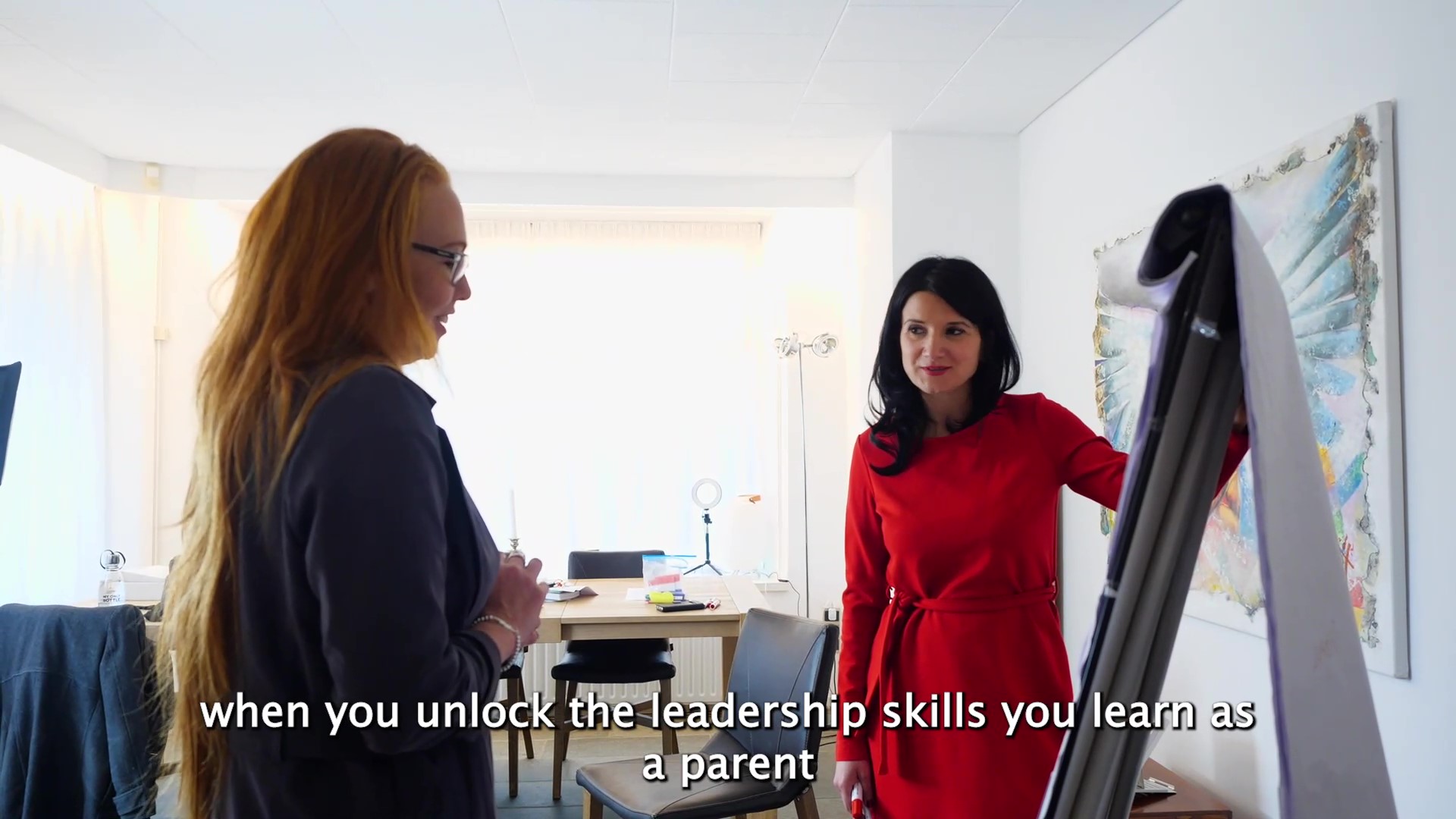 When people describe their best team, they say things like: “I felt safe to speak up and challenge the status quo.” “There was a clear purpose.” “Our boss was present, listened to us.” “I wasn’t afraid people would make fun of my mistakes or punish me.”