Mothers as Leaders has a new voice

Mothers as Leaders has a new voice

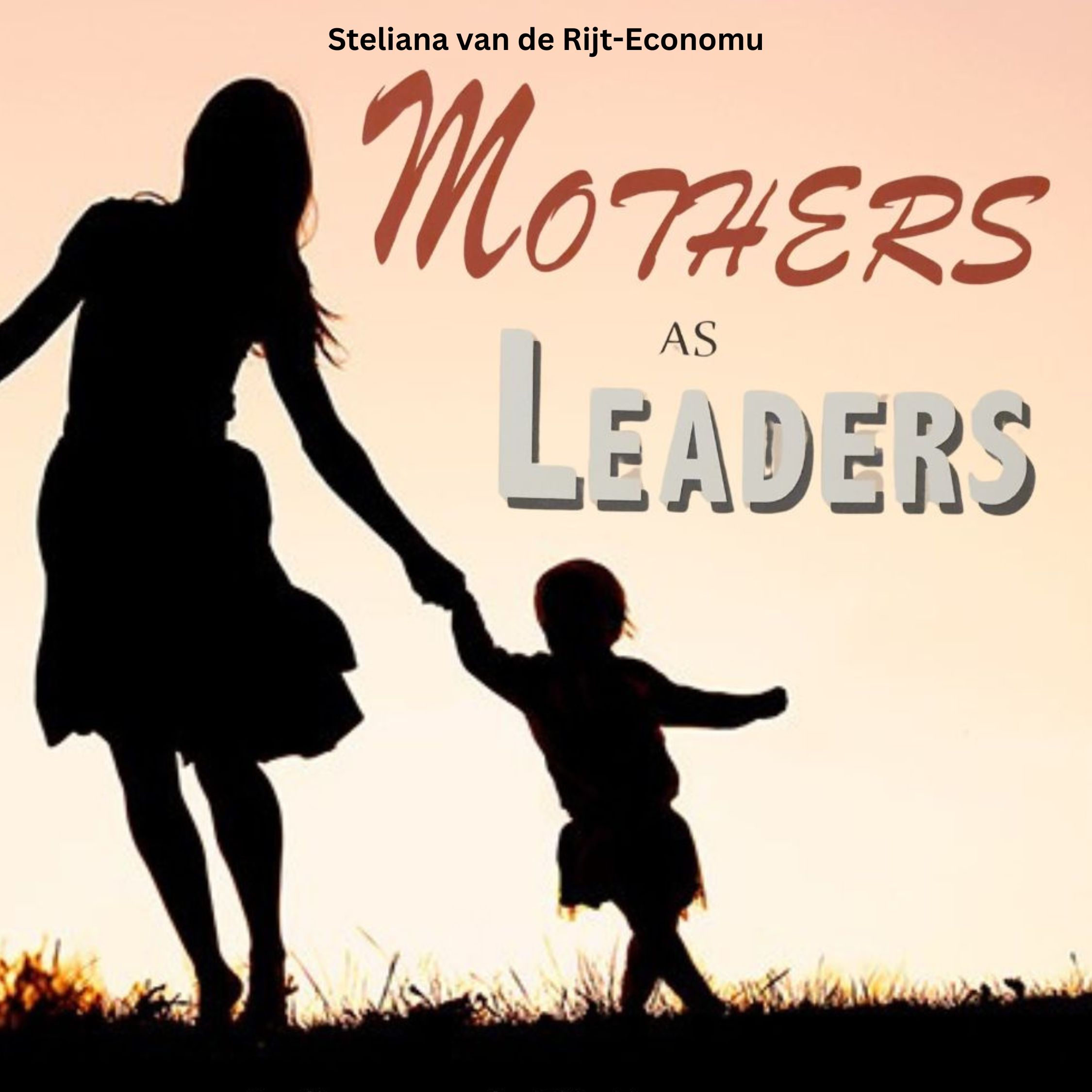
šŸ“šāœØ’Not everybody is a mother, but everyone has a mother or at least had a mother. Just in time for Mother’s Day in the US, the team Mothers as leaders has a new release. The “Mothers as Leaders” is now available on Audible! šŸŽ‰šŸŽ§ . It is being narrated by the professional ACX narrator Gretchen Crispin with energy, compassion and clarity.

“Mothers as Leaders” isn’t about me,Ā  the author; it’s about the incredible women who opened their hearts and shared their journeys with courage and honesty. From overcoming challenges to achieving remarkable success, these stories resonate with the universal experience of motherhood, offering inspiration and empowerment to all. That was one of reasons for choosing a professional narrator who is also a mother and woman leader who can relate with these stories.

🌟 Here’s a glimpse of what you’ll find within the pages:

Chapter 1: Embrace the Beauty of Motherhood
Chapter 2: Balancing Motherhood and Leadership
Chapter 3: Parenthood’s Influence on Dreams and Ambitions
Chapter 4: Cultivating Leadership Skills Through Motherhood
Chapter 5: Motherhood: Barrier or Catalyst for Leadership?
Chapter 6: Navigating the Family vs. Career Dilemma
Chapter 7: Transitioning Through Life’s Stages
Chapter 8: The Impact of Mother Leaders on Society
Chapter 9: Transforming Dreams Into Reality

This Mother’s Day, honor the mothers in your life by gifting them the inspiration and empowerment found within “Mothers as Leaders.” Let’s celebrate the extraordinary women who lead with love, grace, and unwavering strength. šŸ’šŸ’¼

Grab your copy on Audible today and embark on a transformative journey toward realizing your dreams! šŸš€šŸ“– .
šŸŽ For you, the supportive members of my community I do have a limited number of author promo discounted codes, DM separately about it if interested.

And if you prefer the e-book, you can find the kindle version on Amazon or the paperback on our site: in English or Dutch.

Thank you to the incredible mothers in our global learning community and for spreading the news šŸ™

When parenting becomes leadership

When parenting becomes leadership

As parents, we have the unique opportunity to indirectly shape the future generation. How? Not only by taking an important role in society, but by performing the not-so-ordinary role of parenthood as a leadership job.

Beyond wishing them happiness, financial success, and career achievements, we can shape the values we want our children to carry forward into the world.

In my early twenties, I had the opportunity to experience my first leadership role. I was the President of a local NGO with about 40 members, facing financial challenges. My authority came from the votes of the NGO members, and as soon as I took the position, I realized that we were in trouble. During that long year of my first presidential term, I discovered my most important values through challenging events: family, freedom of speech, honesty, integrity, and lifelong learning. One impactful experience was when I was personally threatened with a lawsuit by a corrupt government official who wanted me to cast my non-executive board vote in her favor. My father instilled in me the value of integrity and family, which led me to seek help from my older sister, who had just finished law school.

When you have a strong family around you, you never walk alone.

What are the most important values you developed through your childhood?

We learn by observing the good and bad things the grown-ups around us do, but we truly develop new values when we feel the consequences of our parents’ actions or even our own actions as children. In our ever-crowded daily agenda, there is often no time for reflection on the importance of values. We tend to move from one event to another without pausing to reflect, but without reflection, there is no learning.

These early values served me well as I progressed through my young professional career, but it was only the transition from being a single woman to married life that put a different spin on the value of freedom and family. It was only when I had children that my values were truly tested.

How did your values change or simply evolve when becoming a parent?

As a leadership team coach and a parent, the values I now see as important are:

  • Personal Accountability: Fostering a sense of responsibility in our children.
  • Kindness: Encouraging empathy and compassion.
  • Climate Consciousness: Nurturing an awareness of environmental responsibility.
  • Social Responsibility: Cultivating a sense of duty towards the community.
  • Self-Belief and Self-Regard: Building confidence and self-esteem.
  • Love of Learning: Instilling a passion for continuous growth and learning.

Our family values have become a combination of my values and those of my husband, evolving daily through the dialogue we have with our inquisitive children. At ages 9 and 12, their questions of “Why?” become deeper and more challenging.

As you walk the path of exploration in parenthood and leadership, remember that you are not alone in this journey.

Parenthood is a joint responsibility. Only by engaging our children in life’s big questions can we truly say that we have started to develop their leadership skills and their ability to make important decisions in life.

“We don’t learn through experiences; we learn by reflecting on them.”

Steliana

PS – If you haven’t had a chance to read my bookĀ  Mothers as leaders Ā yet the new year is an excellent time to get it and dive in!

Beyond servant leadership: Blossom, embrace leadership

Beyond servant leadership: Blossom, embrace leadership

True leaders, like mothers, must give more than they receive.

If I think about my own family when I was growing up, my mother always ate last and I don’t really remember her ever sitting for long at the table. Compare this with the world of business, filled as it is with dominant egos and cut-throat politics, where genuinely giving for the sake of helping others and with no personal motive is rare. Never mind eating last, most of us are pushing ourselves in front of the dinner queue with the excuse of seeing others fill their plates as high as they can!

What makes someone a leader?

Some people say that leaders are born, others say they are
made. I think we are all born with the possibility of being leaders but we are also all born with the desire to follow because the
desire to belong to social structures has existed in humans since
the ‘hunter and gatherers’ time.

We want to be part of something bigger than ourselves: an idea, a dream, a purpose. there is a moment in life when you hear a beautiful story, a story that resonates and brings out something that was there, inside of you, all this time.

You feel that a man or woman really understands you and has a vision that you believe in. You are inspired; you follow and, suddenly you see other people following as well. It was all of you together, that have created … the Leader. Without you, she was just a woman or a man with a dream. For women and mothers, servant leadership is not about showing humility and care, it is about having the courage to blossom as a leader and not being afraid to share to let your enthusiasm and energy shine, It is not about arrogance, it is about serving a higher purpose.

Being a leader requires stamina, tenacity, patience and compassion for others. Yet, as a mother, you have these skills embedded in your DNA.

My children motivate me to show the best version of me – Ā I can’t be a just ā€˜resource’ to them I need to be able to inspire them and to offer them a good environment for growth.

Caring for my children helped me to become more patient, and someone better able to step back and see the big picture. I am now officially okay with chaos, uncertainty and volatility.

This is exactly the the world we are living in these days, so to that extent having kids helps us to keep up with the pace of it all.

  • Which leadership skills have you developed since you became a parent?
  • What have you learned from the examples of mothers around you?

Steliana Economu is the author of Mothers as Leaders and a leadership coach specialised in emotional and positive intelligence(PQ and EQ). If you liked this article and want to enjoy more of this type of resources do follow us onĀ  mothersasleaders.comĀ Ā 

How do women and men define (fun) partnerships?

How do women and men define (fun) partnerships?

Women and men appreciate humour differently, we all intuitively know that, but what does it mean for doing business. What does it mean for building partnerships and preserving trust?

In my experience the topic of trust and loyalty comes up after several rounds of team coaching with gender diverse executive teams. Why? There is this expectations that when you grow-up youĀ  are not allowed to mix fun with work. ‘In business we are not boys and girls, we are business professionals. ‘Ā  That’s what our Inner critique would say. When you surrender to gender neutrality you loose your secret weapons, your super power, the strengths that made you the responsible grown-up that you are right now.

When you were six year old and playing in the school yard you were sometimes given the task to choose the team for your next play. What an honour, that was. But who would you choose? Did you ask for the school statistics on who was the fastest runner? No, you first looked at your group of friends and you choose some of them, because…you had fun with them. Then, you looked around and you chose some kids who could run or catch well. It was all a’ fast think’ type decision, full of biases, but …real.

We don’t have the luxury to choose our team like this anymore, but that innate desire to have fun and experience joyĀ  with your team is still in us. Let’s not ignore it just because we are now doing virtual working.Ā  The Sage part of your brain, the one who brings creativity and innovation is stimulated by positive emotions not by ‘must do’ commandments.

Why is humour important in building partnerships?

Well, imagine eating your favourite omelette without salt and pepper.

Beyond, written contractual terms, partnerships are no less than human interactions based on the trust that together you can achieve more than alone. However trust is quite subjective to the one who offers it, so how does someone knows how to trust that you are not going to ‘stabĀ  him in the back’. Well, in middle ages you left the sword and knifes at their feet. Now you need to show vulnerability through your choice of humour. It is risky, they might not like it but that’s exactly the point. You are taking a risk to be vulnerable and that’s what creates trust, both with men and women.

‘It takes two to tango’ – Why partnerships?Ā 

How many times have you struggled on your own with aĀ  project when it would to partner? How many times have you done an extra chore in the houseĀ  when you knew well that it was your partner’s turn?

I must confess I was guilty of both and that’s what triggered me to write this.Ā  You only need to watch two tango dancers to realise the beauty of partnership between a man and woman.Ā  The complimentary traits that build harmony, power and beauty. That’s why, study after study show that diverse teams perform so much better than homogeneous teams.

What are the secret tips for successful partnerships at home and at work?

There are many business books on building partnerships and as a young Business graduate I went through all those trainings while in University. Still, the wisdom of ones who spent more than 10,000 hours on a skill is what we should be looking for. I interviewed a business expert on deal making and partnerships and this is what we came up with.

Five Key Ingredients

  1. SEEK TRANSPARENCY – What does this partnership mean to each of you? Are you the small fish or the big one?
  2. DON’ T ASSUME – How can you keep the lines of communication open all the time?
  3. MAKE SURE YOU BOTH HAVE SKIN IN THE GAME – What does she/has to loose if this fails? How about you?
  4. UNDERSTAND EACH OTHERS MOTIVATION – What drives you to succeed in this partnership? Is it different?
  5. DON’T CROSS THE LINEĀ  – What are partner most important values? How do you make sure you don’t cross the line?

As I wrote this five ingredients down I couldn’t stop thinking about my own family and how do I partner with my husband or even with my 10 year daughter or 6 year old son on some projects. What I find is that with the kids is much easier to know when you crossed the line.

Unfortunately we adults tend to bottle the important emotions and that’s what makes partnership more cumbersome.

Turning the tables

Let’s take an important partnership you would want to improve now. How would you go about it?

  • What are the top 3 Factors impacting it ?
  • What are you Assuming about each factor?
  • What is the one thing you would do now to unlock it?

“********************************************************************

About the author: Steliana Economu is an executive leadership coach specialised in positive intelligence. If like thisĀ  article and you want to enjoy more of this type of resources followĀ  mothersasleaders.comĀ 


Duty. Are you Mister or Mrs Responsibility?

Duty. Are you Mister or Mrs Responsibility?

Last week my six-year-old son received the ‘Responsibility’ spotlight award. Apparently, it is a big thing when you are a first grader at his elementary school.  I was proud but also a little bit worried. Perhaps it is too soon to be responsible. The word that I heard many times as a child was: ‘Duty’. Duty was a trendy word in 1986 in Eastern Europe, but now it is completely out of fashion. It is responsibility the word that a first grader in the US is taught.

So where are you, my dear reader when it comes to Duty and Responsibility? Do you like it, do you hate it, does it drive you?

When it’s 6. 15 0 am and the alarm goes off, do you jump out of the bed? Why do you do that? There is one answer to it: Duty.

As many parents and working people do, I also get out of bed at 6.15. When I enter the room of my 6-year old (Mrs. Responsibility) there is yawning, screaming, sleep- walking towards the washroom and sometimes rejection of every T-shirt. There is complaining about my taste in socks, but after 15 minutes we manage to get to the kitchen for breakfast.

I don’t like my mornings and I even wonder whether raising kids with a strong sense of discipline and duty from such a young age is a good think. We are no different than the communists who were preparing the five-year old children like me to become pioneers. But what else can we do?

The society rules are clear – the school is offered but the discipline comes with it. I hate to say it, but in the morning, I am not the patient leadership coach who gives clients the time to think. In the morning with the kids, I am a tough soccer coach with a whistle and a timer in my hand. I am cheering them up and ushering them towards the front door to catch the school bus.

In leadership training, one of the most often question we pose when it comes to the life’s purpose is: What gets you up in the morning? I always struggled to come up with an intelligent answer to that one – the truth is there are only 2 things for me: the alarm clock or one of my kids showing up next to my bed.

In fact, what lies behind the alarm clock is the word Duty. …the duty towards the employer who pays you salary or the client you serve, but ultimately it is the duty towards your family or even the future family if you are planning for one at some point.

In this new world of purpose driven mission statements, duty is a world we don’t like. To me it felt old-fashion, it reminding me of the communist propaganda from the first 10 years of my life in Romania. To a lot of my friends from The Netherlands, duty sounds like attending the extended family birthday parties or even worse like the catholic church.. Here in America duty is associated with army and patriotism.

But, still if we were to give ā€˜Duty’ the credit it deserves in the world, we would soon realize that Duty is what makes the world move.

It did so ever since humans started to organize themselves in social units called families.  As the social forms got sophisticated Duty became the driving force behind churches, armies and countries, it is what makes the 7. bil people on this planet subdued, obedient and compliant to the order of things. Duty is often hidden in words such as Love, Dedication, Loyalty and Patriotism.   Still, Love without duty is simply a fleeing affair, loyalty without duty is an empty word and Patriotism without duty is hypocrisy. 

Despite our reluctance to admit it, for generations and generations the primary duty of any girl was to become a woman and bear children. It will take years of feminist movements to remove that predefined norm in so many of our societies. As early as the age of 3 we start observing our mothers who dutifully attend to our feeding and nurturing needs and without realizing we learn why is it important. Later, in school we learn to practice duty in small steps, by learning to obey rules and doing our homework.

There is still a short period of our life, when we are ultimately free of that clenching gasp of Duty – the teenager rebel time. We think that we escaped it  but when we are not paying attention, a new duty might come into play and that is the Duty to our GANG of friends.

Later, as a young adult you go to work in an organization and you learn duty to your boss and to your team, in order to get the monthly salary to feed your family. The Circle is complete and the next 30 to 40 years until your retirement, you are driven by this invisible force that makes you do things you don’t want. While Responsibility and Duty for the others is important, where is the DUTY to ourselves? What kind of responsibility do we have to keep our health and mind sane until the end? What kind of responsibility do we have towards our childhood dreams.

How can we keep our eyes open to see duty for what it is. When we turn 80 or even older and we look back on our life – what will we think it’s important and  what will be our regrets?

šŸ‘Steliana van de Rijt-Economu, the author ‘Mothers as leaders‘ is a leadership and positive intelligence coach.

Check out  Mothers as Leaders for our coaching and training offer for parents, leaders and organizations

What makes someone a leader?

KaraleadingSome people say that leaders are born, others say they are made. I think we are all born with the possibility of being leaders but we are also all born with the desire to follow because the desire to belong to social structures has existed in humans since the ‘hunter and gatherers’ time. We want to be part of something bigger than ourselves: an idea, a dream, a purpose.

There is a moment in life when you hear a beautiful story, a story that resonates and brings out something that was there, inside of you, all this time.Ā  You feel that a man or woman really understands you and has a vision that you believe in. You are inspired; you follow and, suddenly see other people following as well. Together you have created … The Leader. Without you, she was just a woman with a dream.

When I was as a child, I liked stories with brave kings and princesses and I thought leading was supposed to happen from the front. I had a romantic view of leadership, one that was supposed to be inspirational and uplifting for the people. The first crack in that romantic image of leadership happened on December 22nd, 1989.

On that day, I was playing in the courtyard of our village farmhouse while my mother was doing the laundry. The radio was on playing some classical music. Suddenly, the music stopped and I heard some loud voices saying: ā€˜The Dictator left, we are free at last, ‘Ceausescu is gone’. In the first ten years of my life I was raised to believe that the ā€˜Dictator’ was the Father of the country, looking after all the children, like me. I simply could not understand why these people called him a dictator. He was kind and generous and was giving children the opportunity to be brave, learn and to become heroes of our country. He was even giving us presents and sweets at the end of the year, just like Santa Klaus did in the western world.

A year before,Ā  at the age of nine I finally earned the honour to be the ā€˜pioneer captain’ of my class, a special award in the communist political ranking of school kids.Ā  On that December day, when the music on the radio suddenly switched into shouts of the revolutionary people, I knew that I would lose my pioneer captain title. Hearing the hard truth about our ā€˜father leader’, who kept people in poverty and crushed the freedom of speech woke me up from my romantic leader ideal.

On that day I learned that leaders who are created through the stories they spread or control can vanish in a flash. I also learned not to trust power, because power can corrupt anyone if held in one man’s or woman’s hand. After 1989 my idea of leadership changed completely. I looked around me for role models and, fortunately, I didn’t have to look far. My grandmother inspired in me generosity for the poor; my grandpa taught me the joy of commitment and duty; my father instilled in me the power of self-confidence and self-belief; and my mother gave me the power of perseverance and discipline.

This childhood experience instilled in me a certain rebel attitude towards people who see a leadership role as a position of power, but it also influenced my deep belief that mothers are leaders, despite the perceived lack of power.

Ā Nature hasn’t created a single relationship as powerful and naturally strong as the one between a mother and her child. From giving life,Ā  nurturing and raising children and up to they eventually fly the nest, mothers are often the leaders who guide and keep families and communities together.

So, if mothers are indeed leaders, how can we let the whole world see it and admit it?

Anyone who is a parent knows that the best school to develop emotional intelligence is the practice of good parenting because parenthood in itself is leadership.

Daniel Goleman, the man who brought the topic of emotional intelligence into the spotlight in the ’90s, wrote in the HBR articleĀ Ā  ‘What Makes a Leader’ about the critical importance of being aware of oneself and of other’s emotions. He also wrote that leaders who want to be successful in today’s world need to develop five crucial skills of emotional intelligence. Adapting Goleman’s’ concepts to women and drawing on my own experience as a mother, I developed a beautiful basket of gifts, including exercises and tips that will help mothers show the world their inherent leadership skills:

  1. Awareness & Empathy: the art of recognising and deciphering your own emotions and the art of being in tune with other people’s feelings.
  2. Social Awareness: the ability to appreciate the diverse perspectives about you and to flex your approach to a situation while staying true to your core.
  3. Self-Management: the strength to recognize and regulate your disruptive impulses and moods.
  4. Social Skills: the intuition required to find common ground and build rapport with other people, balanced with the discipline for managing and harvesting relationships and networks.
  5. Ambition and Drive: to work for something bigger than money and short-term gains.

However the most important gift for any woman who becomes a mother is the inner self-belief that if you had the power to create life you have the power to do anything you set your mind on.

‘Good enough mothers can become incredible effective leaders’. Helen Murlis

What do you think makes someone leaders?

Ā ************************************************************************************

About the Author:

Steliana van de Rijt-Economu is a mother of twoĀ andĀ aĀ leadership consultant and coach.Ā She believes that the world would be a better place when more women and mothersĀ Ā ā€˜lean in’ to take formal leadership positions in society. In 2019 she published the book Mothers as Leaders.